
What do we risk losing when we cut costs?
Brand investment in uncertain times
Here we are again. A world that feels shaky and a political situation that is anything but clear.
During periods like these, something fairly predictable happens at many companies. Budgets become more cautious and the focus shifts to what we can influence here and now. That usually means costs.
It is a pattern I recognise from my own time as a CFO. There is something reassuring about what can be controlled.
Savings are concrete. If we take a few million out of the budget, it is quick to see what that does to the bottom line. In uncertain times, that is a very attractive move.
What is much harder to see is what we are giving up at the same time.
Some investments are relatively easy to describe in a budget process. A new system will improve efficiency. A new hire will increase capacity. Product development will create new revenue.
Brand investments are trickier. Not because there is no effect, but because the link between effort and effect rarely fits within the same budget year.
Brand work is therefore fundamentally built on long-term assumptions about the future. We invest today because we believe that, over time, it will contribute to a clearer position, stronger preference, greater willingness to pay or a stronger brand.
I still have a soft spot for ROI. It is second nature after my years in finance. I always want to understand what effect an investment is expected to create, and to follow up on whether it actually did. At the same time, not every return can be isolated or calculated in the short term, but that does not make follow-up any less important. Quite the opposite.
Because if the investment is seen as vague while the saving is concrete and shows up directly in the next quarterly report, it is fairly easy to guess which one wins.
That is why I believe marketing and finance need to get better at meeting in the same discussion during the budget process. Both need to be able to describe the assumptions their decisions are actually based on.
Because the decision to cut is also an assumption about the future.
When we reduce investment in a brand, we are also assuming that awareness will hold. That customer trust will remain. That willingness to pay will still be there. That competitors will not advance their positions. That our own position will not weaken.
Those assumptions are rarely as visible in a budget. The investment is always forced to prove its future value, while the saving is counted immediately.
So the next time the question in the budget discussion is how much can we save, it should be followed by one more question: how much are we prepared to lose?
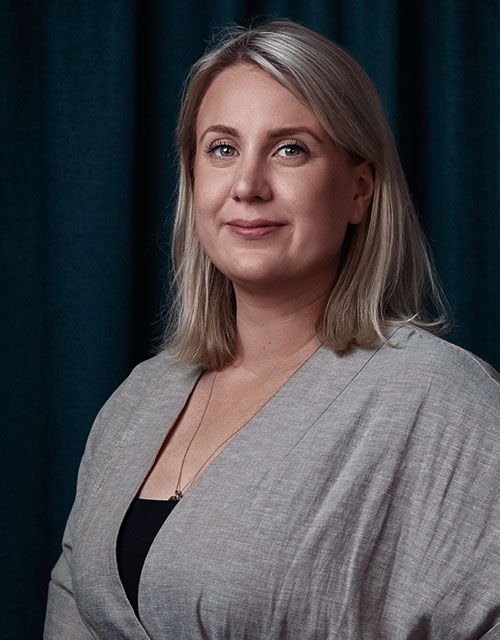
Ana Serafimovska
CEO, Novus
In Novus Varumärkesbrev, our brand newsletter (in Swedish), we regularly share insights, facts and reports on brands and communication. Want to get it as it happens? Subscribe here!